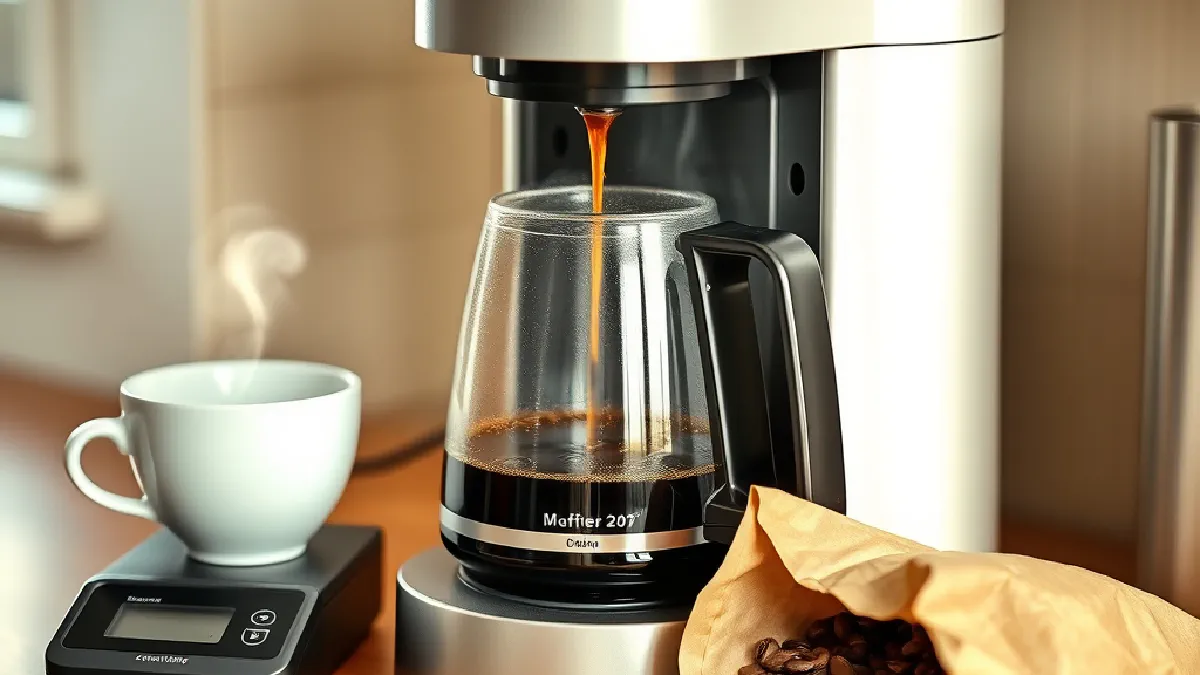
The Most Ignored Brewer in Specialty Coffee
The automatic drip machine is the brewer most people actually own, and the one coffee advice tends to skip straight past on its way to the V60. That is a shame, because drip is the only method that makes a litre of good coffee while you are in the shower.
A drip machine is a pour-over that pours itself. The water goes over a bed of grounds, through a filter, into a pot. Everything that makes a pour-over taste good applies here too — the difference is that the machine controls the variables you would otherwise control by hand, and some machines control them badly.
Here is what “good” means in numbers, and what you can do about the parts the machine leaves to you.
The Target
The Specialty Coffee Association publishes exact requirements for the drip brewers it certifies. They are worth knowing even if your machine will never be tested, because they describe the cup you are aiming at.
| Parameter | SCA requirement |
|---|---|
| Brew ratio | About 55 g coffee per litre of water |
| Water temperature at the grounds | Reaches 92 °C within the first minute, stays at or above it, never exceeds 96 °C |
| Contact time | More than 4 minutes, less than 8, at full capacity |
| Wetting | All the coffee in the basket wet within the first minute |
| Extraction yield | 18.0–22.0% of the dry coffee |
| Strength | 1.15–1.45% dissolved solids |
| Carafe holding temperature | 80–85 °C for the first 30 minutes, and never climbing |
| Sediment | Under 75 mg per 100 ml of brewed coffee |
Two of those are yours, not the machine’s: the ratio and the grind. The rest is hardware. That split is the whole story of drip brewing.
The Recipe
| Batch | Coffee | Water | Grind |
|---|---|---|---|
| Small (2 mugs) | 33 g | 600 ml | Medium |
| Half pot | 55 g | 1 L | Medium |
| Full pot (most 10–12 cup machines) | 66–72 g | 1.2–1.3 L | Medium |
Weigh the coffee. A “scoop” is somewhere between 7 and 12 g depending on the scoop, the grind and how hard you pack it, which is enough slop to move a pot from balanced to thin. A kitchen scale removes the entire problem for about fifteen dollars.
If 55 g/L tastes strong to you, brew it anyway and dilute the cup with hot water. That gets you a properly extracted coffee at the strength you like, rather than an under-extracted one that is weak and sour.
Grind for the Basket You Have
Medium, roughly the texture of granulated sugar. But basket shape matters more than most people expect — an SCA-published study found the difference between flat-bottom and conical baskets was clearly perceptible to tasters, with flat baskets giving more dried-fruit, sweet and floral character and cones leaning citric, berry-like and sour.
| Flat-bottom basket | Conical basket | |
|---|---|---|
| Bed | Shallow and even | Deep in the middle, thin at the edges |
| Flow | Even across the bed | Faster through the centre |
| Grind | True medium | A notch coarser |
| Tends toward | Sweet, round, dried fruit | Bright, citric, sharper |
Whatever the shape, the grind needs to come from a burr grinder . Blade grinders produce dust and boulders at the same time; the dust over-extracts into bitterness while the boulders are still sitting there contributing nothing. No brew ratio fixes that.
Five Habits That Fix Most Pots
- Brew closer to full. Machines are tested and tuned at full capacity. A 12-cup machine making two cups often dribbles water over a thin bed too slowly and too cool. Brew bigger batches, or buy a smaller machine.
- Level the bed before you start. Shake the basket flat. A sloped bed drains unevenly, and uneven draining is under-extraction on one side and over-extraction on the other, in the same pot.
- Bloom it by hand if the machine won’t. No pre-infusion setting? Start the brew, let it run about 30 seconds, switch it off for another 30 while the grounds degas, then switch it back on. Freshly roasted coffee releases a lot of CO₂, and that gas pushes water away from the grounds.
- Get the pot off the hot plate. A glass carafe on a warmer keeps cooking the coffee, which is where the stewed, flat taste of office coffee comes from. Decant into a thermos, or buy a machine with an insulated carafe — the SCA spec explicitly forbids the coffee’s temperature rising during holding.
- Rinse the paper filter with hot water before you add coffee, the same as you would for pour-over . It takes ten seconds and removes the papery taste. See the filter guide for what each material does to the cup.
Buying: What Actually Separates Machines
Price mostly buys one thing — a heating element strong enough to deliver water at 92–96 °C through a whole batch. Cheap machines run cool, and cool water under-extracts, which tastes sour and thin no matter how good the beans are.
Worth paying for:
- A real heating element. This is the one spec that cannot be worked around.
- A showerhead, not a single drip hole. One hole in the lid wets the middle of the bed and little else.
- A thermal carafe, so nothing sits on a hot plate.
- Pre-infusion, if offered. Not essential — the manual trick above does the same job.
Not worth paying for: built-in grinders (usually blade or low-quality conical burrs), programmable clocks that encourage you to brew onto stale pre-ground coffee, and “bold” buttons, which generally just slow the flow.
The SCA maintains a list of certified home brewers that have passed the tests in the table above. It is a short list, and a useful shortcut if you would rather not evaluate claims yourself.
Cleaning, Which Is Not Optional
Two separate jobs:
- Wash the basket and carafe after every brew. Coffee oils go rancid, and rancid oil tastes exactly like it sounds.
- Descale every one to three months, more often with hard water. Scale coats the heating element and insulates it, so the machine stops reaching brew temperature — the same sour, weak cup as a cheap machine, arrived at by neglect. Run the descaler your manufacturer specifies, or a weak citric acid solution, then two full cycles of plain water.
If your coffee has drifted worse over months without you changing anything, descaling is the first thing to try. What goes in the reservoir matters too: see water for coffee .
Troubleshooting
| Symptom | Likely cause | Fix |
|---|---|---|
| Sour, thin, watery | Under-extraction: cool water, coarse grind, too little coffee | Descale, grind finer, weigh to 55 g/L |
| Harsh and bitter | Over-extraction, or stewing on the hot plate | Grind coarser, decant immediately |
| Flat and dull | Stale beans or rancid oils in the machine | Check the roast date ; wash the basket |
| Great one day, bad the next | Scooping instead of weighing | Use a scale |
| Grounds in the cup | Filter collapsed or wrong size | Seat the filter properly; check the size |
Change one thing at a time and taste after each — the same method as dialing in any other brewer.
Worth Knowing
A drip machine will not beat a careful pour-over on a great light roast. It does not need to. It needs to make a litre of clean, sweet, properly extracted coffee at 6 a.m. without supervision, and a decent machine fed weighed, freshly ground, medium-roasted coffee does exactly that.
Most bad drip coffee is not the machine’s fault. It is a scoop instead of a scale, a blade grinder, and a pot left on a warmer for an hour.