The Cheapest Part of Your Setup, and Not the Least Important
A filter costs a few cents and sits in the brewer for three minutes. It still decides how your coffee feels in the mouth, because it decides what gets through: the oils, the fine particles, and a pair of compounds that affect your cholesterol.
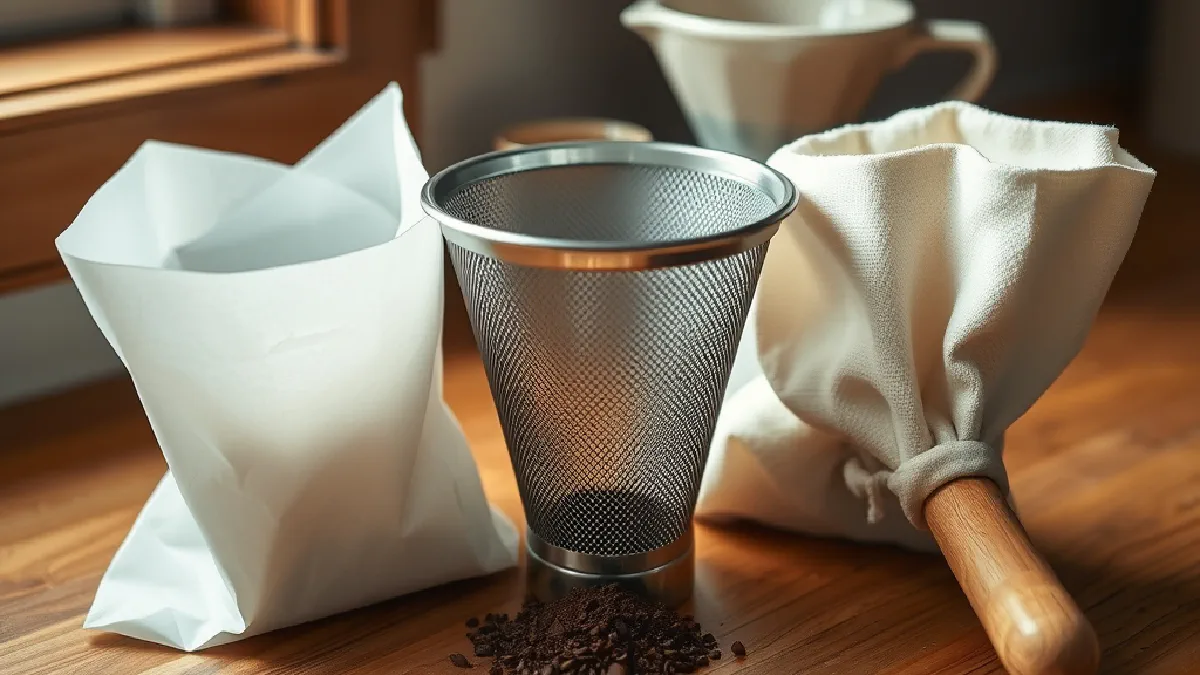
Three materials do the job. None of them is wrong.
Paper vs Metal vs Cloth
| Paper | Metal mesh | Cloth | |
|---|---|---|---|
| What it holds back | Oils and nearly all fines | Grounds only; oils and some fines pass | Most fines; some oil passes |
| Cup | Clean, bright, tea-like | Heavier, rounder, slightly cloudy | Full body with a clean finish |
| Cholesterol compounds | Removed | Pass through | Partly held back |
| Cost over time | Ongoing, cents per brew | Buy once | Buy once, replace every few months |
| Upkeep | Throw it away | Rinse and scrub the mesh | Rinse after every brew, store wet or fully dry |
| Best for | Pour-over and clarity | French press drinkers who want a cone | People chasing body without sludge |
Metal mesh is typically around 100–150 microns, which holds back grounds but lets oils and micro-sediment through. That is exactly why the cup is heavier and a little darker in the glass. Cloth sits between the two: finer than metal, so less sediment, but more oil than paper lets past.
The Cholesterol Part
Coffee contains two oily compounds, cafestol and kahweol, that raise LDL cholesterol. A paper filter traps them; metal does not. Unfiltered brews carry roughly thirty times the concentration of these compounds that paper-filtered coffee does.
A 2025 study from Uppsala University estimated that swapping three daily cups of unfiltered coffee for paper-filtered coffee would lower LDL cholesterol by about 0.58 mmol/L.
If you drink one cup a day, this is not worth losing sleep over. If you drink a liter of French press every morning and your doctor has mentioned your cholesterol, paper is the easy change.
Bleached or Unbleached?
White filters are bleached, brown ones are not. The brown ones are not dirtier and the white ones are not full of chlorine — modern bleaching is oxygen- or chlorine-dioxide based.
The real difference is papery taste, and it comes down to rinsing. Unbleached paper is more likely to taste of cardboard straight from the pack. Rinse either one and nobody can tell them apart in the cup.
Rinsing takes ten seconds and does two other jobs at once:
- Set the filter in the dripper and pour hot water through it until it is soaked.
- Dump the rinse water out of the carafe.
- Add your coffee and brew.
That washes out the paper flavor, preheats the dripper and carafe, and helps the filter sit flush against the walls. It is the single highest-value habit in this whole article.
Buying the Right Shape
Filters are not interchangeable, and the wrong one changes your brew time badly.
| Brewer | Filter | Note |
|---|---|---|
| Hario V60 | 60° cone, size 01 or 02 | Size must match the dripper number |
| Kalita Wave | Fluted wave, 155 or 185 | Flat-bottomed; a cone will not sit right |
| Chemex | Chemex bonded, square or circle | 20–30% thicker than V60 paper, so it brews slower |
| Drip machine | Basket or cone, by machine | Check the manual |
| AeroPress | Small round paper or metal disc | Metal discs give a heavier cup |
The Chemex case is the one that catches people out. Its paper is deliberately thick, and the 4–5 minute brew time is built around that. Drop a thin generic paper in a Chemex and the water runs through in half the time, which gives you a sour, under-extracted cup through no fault of your grind.
Thicker paper slows flow. That is also why Wave filters, which sit between V60 and Chemex in thickness, land in the middle on body and clarity.
Living With a Cloth Filter
Cloth gives a lovely cup and asks for discipline in return. Coffee oils go rancid in fabric, and a neglected cloth filter will taste of it.
- Rinse it thoroughly in hot water right after brewing — no soap, which the fabric holds onto.
- Never leave it to dry with oils still in it.
- Store it either fully dry or submerged in water in a sealed container in the fridge or freezer.
- Boil it occasionally to strip buildup.
- Replace it every few months, or when it starts brewing noticeably slower.
If that sounds like work, it is. Metal asks much less: rinse it, and scrub the mesh with a brush when flow slows down.
So Which One?
- Start with paper. It is forgiving, it is clean, and it makes the clarity of a good light roast obvious.
- Try metal if you like the body of a French press but want the control of a cone, or if you want to stop buying filters.
- Try cloth if you have already decided body matters to you and you do not mind the upkeep.
Then change nothing else for a week. A filter swap shifts body and clarity enough to be worth judging on its own, before you start moving your grind and dialing the recipe back in .