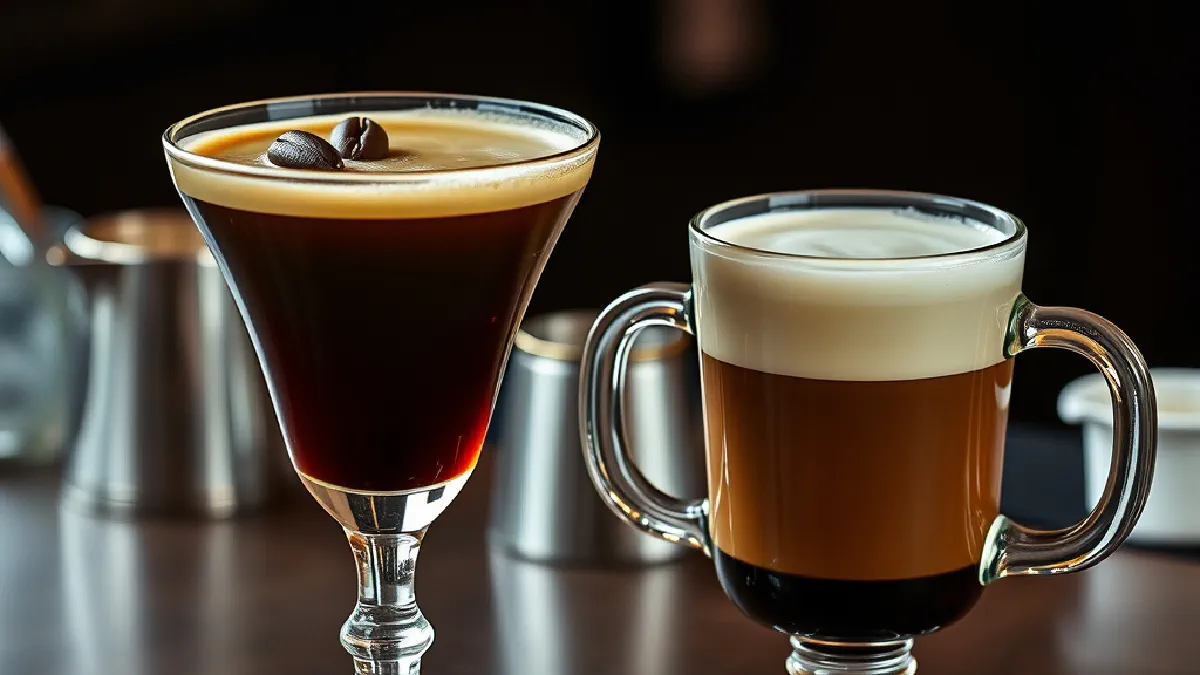
Two Drinks, Two Problems
Almost every coffee cocktail is one of these two, and each has a single technical hurdle that separates the good version from the sad one.
An espresso martini is cold, and its whole appeal is the tan foam cap on top. Get that wrong and you have brown vodka. An Irish coffee is hot, and its appeal is drinking hot sweet coffee through a layer of cold cream. Get that wrong and you have coffee with cream stirred into it.
Both problems are solved by technique, not by expensive ingredients.
The Espresso Martini
Dick Bradsell invented it in London around 1983, at the Soho Brasserie, for a customer who asked for something that would wake her up and then knock her out. The espresso machine happened to sit right next to his station.
The recipe
Makes 1 drink.
| Vodka | 2 oz (60 ml) |
| Coffee liqueur | ½–1 oz (15–30 ml) |
| Fresh espresso | 1 double shot, about 1 oz (30 ml) |
| Simple syrup | ¼ oz (7 ml), to taste |
| Garnish | 3 coffee beans |
Bradsell’s own build was the narrower one — 2 oz vodka, ½ oz coffee liqueur, ¼ oz syrup. The International Bartenders Association version drops the syrup and pushes the liqueur to 1 oz, which lands sweeter. Start at Bradsell’s ratio and add liqueur if it reads too dry.
Steps
- Chill the glass. Freezer or ice water while you work.
- Pull the shot straight into the shaker, onto the other ingredients. Do not let it sit on the counter.
- Fill with ice and shake hard — 15 to 20 seconds, until the shaker is painfully cold.
- Double-strain into the chilled glass.
- Wait about ten seconds for the foam to separate and set, then float three beans on top.
Tip: The single most common mistake is cold espresso. Use the shot within a minute of pulling it.
Why the foam happens
Shaking whips air into the drink. The oils and dissolved CO₂ carried in fresh espresso crema are what trap those bubbles so they survive the pour and rise into a cap.
That is also why substitutions behave differently. Cold brew and drip coffee have far more of those oils filtered out, so a cold-brew martini tastes fine but barely foams. If cold brew concentrate is what you have, use it and accept a flat top — or add ½ oz of the coffee liqueur’s syrupy body back in to help.
Irish Coffee
Chef Joe Sheridan made the first ones at Foynes Airport in Ireland for cold, stranded transatlantic passengers. San Francisco Chronicle travel writer Stanton Delaplane tried it there and talked Jack Koeppler, owner of the Buena Vista Cafe, into recreating it. Their version is still the benchmark.
The recipe
Makes 1 drink.
| Irish whiskey | 1½ oz (45 ml) |
| White sugar cubes | 2 |
| Hot brewed coffee | About 4 oz (120 ml), filling a 6 oz glass |
| Heavy cream | A thick spoonful, lightly whipped, floated |
| Glass | A 6 oz footed glass mug, pre-warmed |
Steps
- Pre-warm the mug with hot water, then dump it. A cold glass kills the drink in a minute.
- Add the sugar cubes and the hot coffee and stir until the sugar is completely dissolved.
- Stir in the whiskey.
- Float the cream over the back of a spoon held just above the surface, so it lands gently and spreads rather than sinking.
- Do not stir. Drink the hot coffee through the cold cream.
Making the cream float
This is the part people get wrong. The cream has to be thick enough to sit on the surface but still pourable.
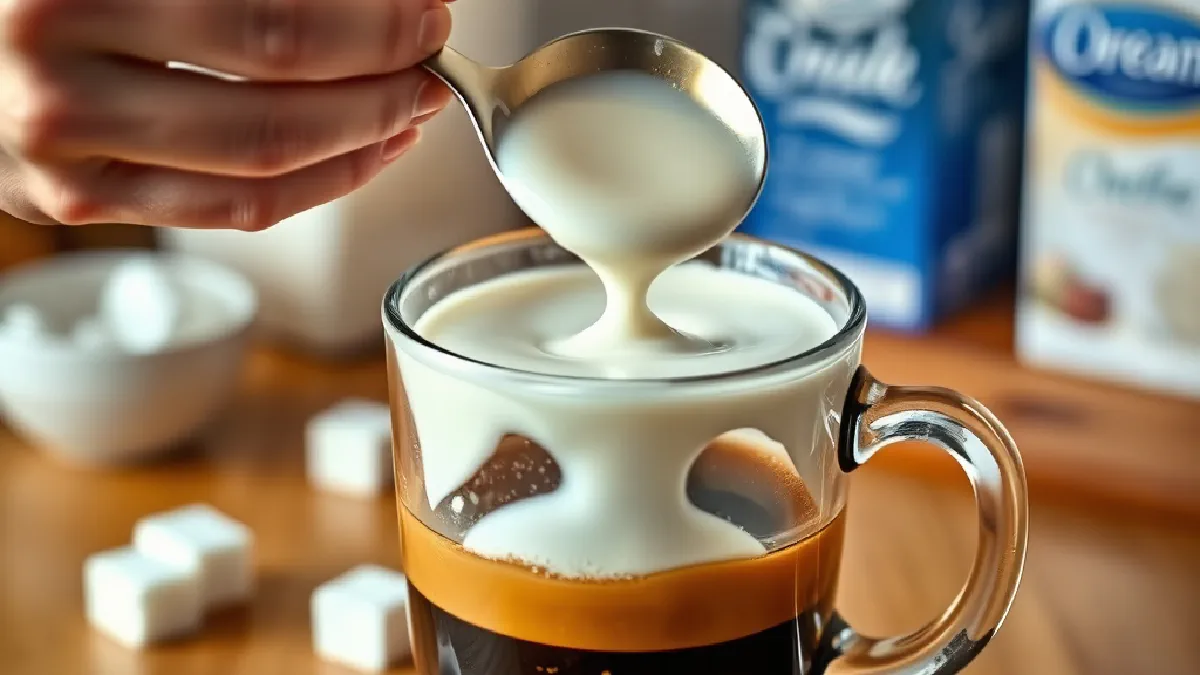
- Whip it only until it just thickens — it should ribbon off a spoon, not hold a peak. Over-whipped cream sits on top as a lump instead of a layer.
- Use heavy cream, not half-and-half. Fat is what makes it float.
- The Buena Vista ages its cream for about 48 hours before whipping, which thickens it further. At home, a day-old carton of heavy cream behaves better than one opened five minutes ago.
- Make sure the sugar is fully dissolved before the cream goes on. Sugar raises the density of the coffee underneath, which helps hold the layer up.
Which Coffee to Use
| Roast | In an espresso martini | In an Irish coffee |
|---|---|---|
| Medium | The safe pick — chocolate and caramel notes, good crema, mingles with the liqueur | Sweet and round; the Buena Vista style |
| Medium-dark or espresso roast | Bold enough to stand up to the vodka; the standard bar choice | Smoky and strong; holds up to the whiskey |
| Light | Fruity and surprising — a natural Ethiopian turns it into berries and cream, but it can read thin | Usually too delicate; the whiskey covers it |
Bartenders disagree about dark versus medium, and both camps are right about their own drink. Dark roast brings the bitterness that balances sugar and liqueur; medium roast pulls a better crema and tastes less harsh. Try one bag each way before settling.
Whatever you pick, the beans need to be fresh — see roast dates and storage . Stale coffee gives up almost no crema, and in an espresso martini that is the whole drink.
No Espresso Machine?
For the martini you need something concentrated. For the Irish coffee, ordinary strong drip is exactly right.
| Method | For the espresso martini | For Irish coffee |
|---|---|---|
| Moka pot | Closest substitute; some crema, plenty of body | Too strong on its own, cut it with hot water |
| AeroPress | 15 g fine, 60 g water, press at 1 minute — strong but little foam | Brew normally; clean and good |
| Cold brew concentrate | Works, barely foams | No — the drink needs to be hot |
| Drip or pour-over | Too weak; waters the drink down | The classic choice |
| Instant espresso powder | 1 tsp in 2 tbsp hot water, in a pinch | Workable, flatter |
Wrap-Up
Two rules cover both drinks. For the martini: fresh, hot espresso into the shaker, and shake harder than feels necessary. For the Irish coffee: warm the glass, dissolve the sugar fully, and under-whip the cream.
If you want a third option with no shaker and no whiskey, an affogato with a tablespoon of coffee liqueur poured over gets you most of the way there in two minutes.
Sources: Dick Bradsell’s original espresso martini , Espresso martini history and IBA recipe , The Buena Vista Cafe’s Irish coffee recipe , a Las Vegas bartender on roast choice .