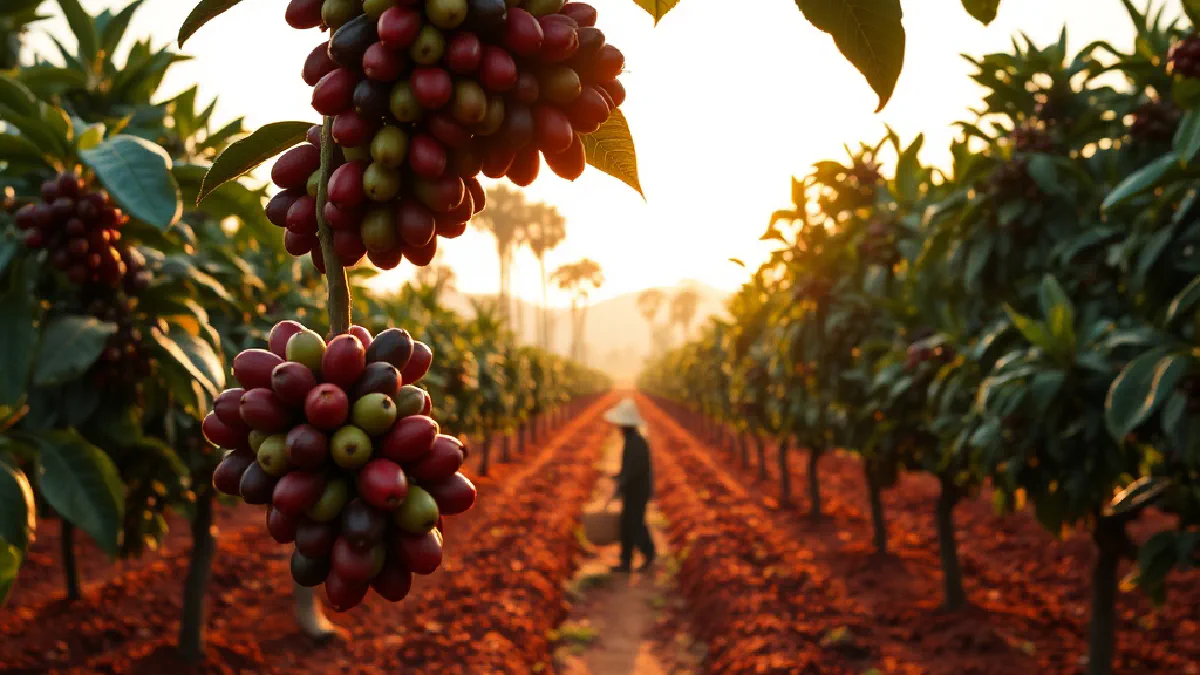
The Biggest Coffee Country You Probably Haven’t Bought
Vietnam is the world’s second-largest coffee producer after Brazil, and the largest producer of Robusta by a wide margin. USDA attaché estimates put the 2025/26 crop at about 31.7 million 60 kg bags, of which roughly 30.5 million are Robusta and only about 1.2 million are Arabica.
That ratio is the whole story. Most of what Vietnam grows is Robusta, and most of it leaves the country as commodity-grade beans that end up in instant coffee and supermarket blends. So a coffee drinker who shops at specialty roasters can go years without knowingly drinking Vietnamese coffee, even though the country supplies a sixth of the world’s beans.
Two things are changing that: a small but serious Arabica sector in the highlands, and a growing number of roasters treating Robusta as something worth doing well.
A Short History
French missionaries brought the first Arabica plants in 1857, planting them around churches in the northern provinces before coffee moved south into the Central Highlands, where altitude, rich volcanic basalt soil and a reliable wet season suited it far better.
The transformation came much later. In 1986, as part of the Đổi Mới economic reforms, the government made coffee a national priority and encouraged ordinary households — not just state farms — to plant it. What followed was one of the fastest agricultural expansions in modern history: within about two decades Vietnam went from a minor producer to number two in the world and number one in Robusta.
That speed explains a lot about the coffee. The industry was built for volume and for a species that yields heavily, resists disease and grows well at lower elevations.
The Regions on Your Bag
| Region | Where | Mostly grows | Rough altitude |
|---|---|---|---|
| Dak Lak | Central Highlands, around Buon Ma Thuot | Robusta | ~1,300–2,600 ft (400–800 m) |
| Gia Lai / Kon Tum | Central Highlands, north of Dak Lak | Robusta | ~1,600–2,600 ft (500–800 m) |
| Lam Dong (Da Lat, Cau Dat) | Southern highlands | Arabica, some Robusta | up to ~5,200 ft (1,600 m) |
| Son La | Northwest, near the Lao border | Arabica | ~3,000–3,900 ft (900–1,200 m) |
Buon Ma Thuot in Dak Lak is Vietnam’s coffee capital, and the heart of Robusta country. Cau Dat, on the plateau above Da Lat in Lam Dong, is the opposite end: cool, foggy, high enough for Arabica, and the source of most of Vietnam’s best-known specialty lots. Son La is the second Arabica province, and the only significant one in the north.
Tip: “Da Lat” on a bag usually means Arabica from Lam Dong. “Buon Ma Thuot” almost always means Robusta.
Robusta, Taken Seriously
Robusta is a different species from Arabica, with roughly double the caffeine, less sugar and more chlorogenic acid. Brewed carelessly it is the flat, rubbery, burnt-tyre cup that gave the species its reputation. Our Arabica vs Robusta guide covers the biology.
Most Vietnamese Robusta is dried as a bulk natural with little sorting. But a small “fine Robusta” segment now applies specialty practices — selective picking of ripe cherry, careful washed, honey or controlled natural processing , and proper drying. Done that way, Robusta gives dark chocolate, roasted nut, molasses and sometimes stone-fruit sweetness, with a thick, almost creamy body and very low acidity.
It will never taste like a washed Kenya. That isn’t the point. It makes superb iced coffee, it cuts through condensed milk, and it adds body and crema to an espresso blend.
When It Is Harvested
Robusta has one main harvest a year, roughly October to January, with the bulk of picking in November and December. Arabica in Lam Dong and Son La runs on a similar calendar, generally starting a little earlier. Fresh-crop Vietnamese coffee typically reaches US roasters from late in the first quarter onward.
How to Brew It: The Phin
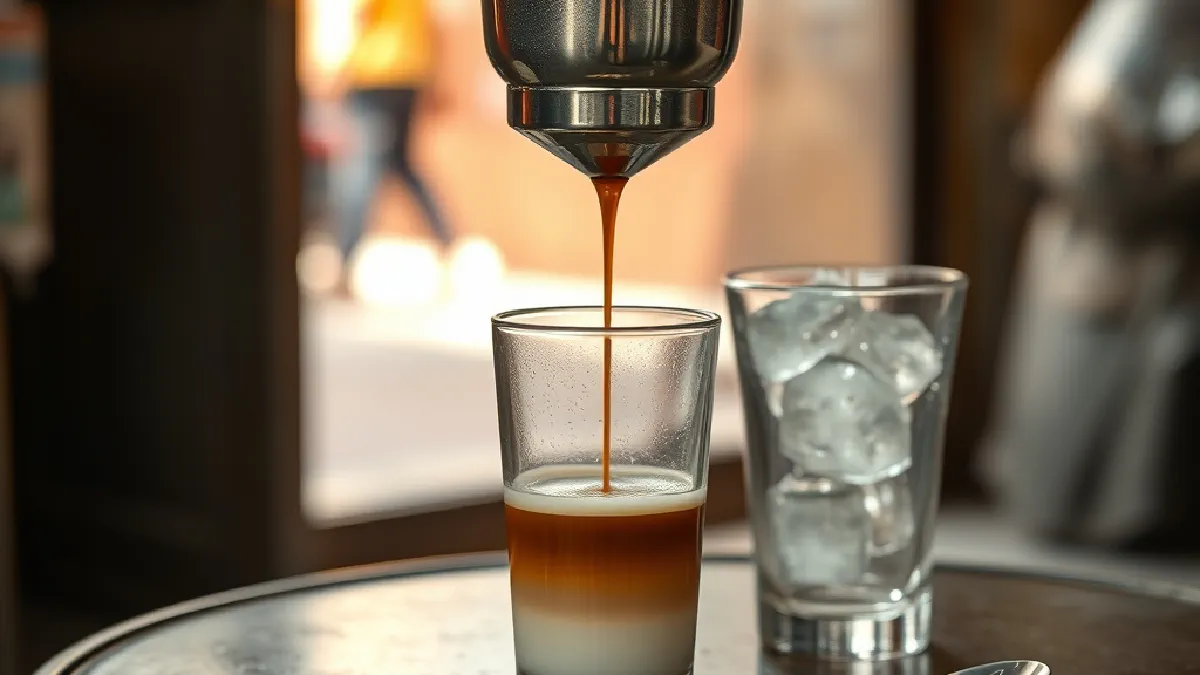
The phin is Vietnam’s filter: a small metal cup with a perforated base, a press disc that sits on the grounds, and a lid. It sits straight on your mug or glass and drips. No paper, no power, about $10.
| Step | What to do |
|---|---|
| Grind | Medium-coarse, like coarse sand — too fine and it clogs, too coarse and it gushes |
| Dose | 15–22 g coffee, depending on your phin’s size |
| Water | Just off the boil, about 200–205 °F (93–96 °C) |
| Bloom | Pour ~30 g, wait 30 seconds |
| Brew | Top up to about 120 g, lid on, let it drip 4–6 minutes |
The slow drip is the whole trick: it builds a syrupy, concentrated cup — roughly a 1:5 ratio — that stands up to ice and milk. If it finishes in under three minutes, screw the press disc down a touch or grind finer; if it stalls past seven, go coarser or ease off the press.
Cà Phê Sữa Đá, Step by Step
Vietnamese iced coffee with condensed milk. Makes one tall glass.
- Put 2–3 tablespoons of sweetened condensed milk in the bottom of a heatproof glass.
- Set the phin on top, add 20 g of dark-roasted coffee, medium-coarse, and level it.
- Seat the press disc, pour 30 g of hot water, and wait 30 seconds for the bloom.
- Fill to about 120 g, put the lid on, and let it drip for 4–6 minutes.
- Lift the phin off, stir hard until the condensed milk is fully dissolved.
- Pour over a separate glass packed with ice, or add the ice straight in.
Serve it cold enough to be bracing. For cà phê đen đá — black iced coffee — skip the milk and add a teaspoon of sugar to the hot concentrate before icing it.
No phin? A moka pot or a concentrated AeroPress gets close. A long pour-over does not — it is too dilute to survive the milk.
Buying Your First Bag
- For the traditional drink, buy a dark-roasted Vietnamese Robusta or Robusta/Arabica blend sold for phin brewing. Expect chocolate and nuts, not fruit. Our dark roast guide explains what that roast level does.
- For something closer to specialty coffee you already know, look for washed Arabica from Cau Dat or Son La, and brew it as you would any other medium-altitude Arabica.
- To understand why Robusta gets talked about badly, buy a fine Robusta from a roaster that names the farm or cooperative. The gap between that and a supermarket bag is the gap the whole category is arguing about.
- As always, look for a roast date, and drink it within two to four weeks — see freshness and storage .
Vietnam is the best argument that cheap coffee and good coffee are different questions. Brew a phin of dark Robusta next to a bright Ethiopian pour-over and you will taste two drinks that barely belong to the same beverage.