The Question Behind the Question
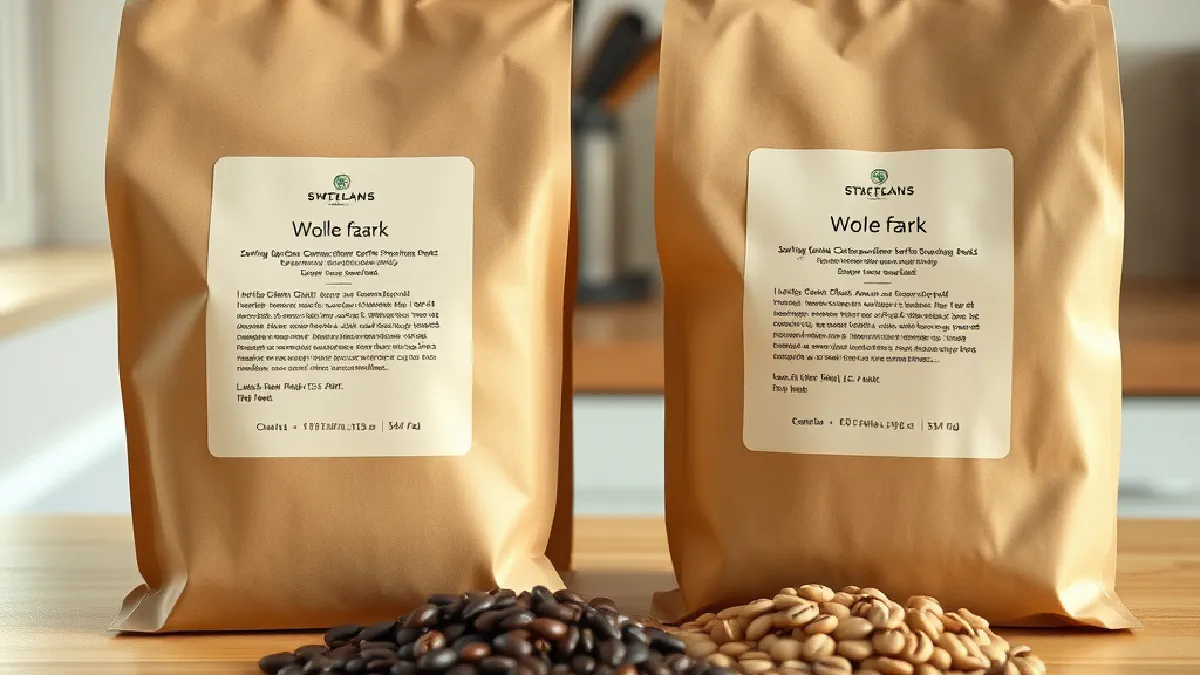
Stand in front of a specialty shelf and you face the same fork every time: a bag naming one farm in Ethiopia, and a bag next to it called something like “Daybreak Blend.” The usual assumption is that the first is the serious coffee and the second is the cheap filler.
That assumption is wrong often enough to cost you good coffee. Single origin and blend are not a quality ladder. They are two different jobs, and the roasters worth buying from do both deliberately.
What “Single Origin” Actually Guarantees
Less than you would think. There is no regulated definition of the term — not from the Specialty Coffee Association , not from the International Coffee Organization, not from any trade body. It means the coffee is traceable to one defined place, and the label decides how tightly “one place” is drawn.
| Level on the bag | What it means | Traceability |
|---|---|---|
| Country — “Colombia” | Beans from one nation, possibly thousands of farms blended together | Weak |
| Region — “Huila, Colombia” | One growing area, still many producers | Moderate |
| Co-op or washing station — “Hambela, Guji” | One processing site, a known set of smallholders | Good |
| Farm or estate — “Finca El Paraíso” | One producer, named | Strong |
| Lot or micro-lot — “Lot 14, Gesha, washed” | One variety, one process, one picking | Strongest |
All five can legally be sold as “single origin.” A country-level bag is closer in traceability to a blend than it is to a named micro-lot, so the word on its own tells you almost nothing — what matters is how specific the line underneath it gets. That specificity is the real signal, and it is the same signal covered in how to read a coffee bag .
What a tightly traced single origin does give you is terroir: the altitude, soil, variety and processing of one place, unmixed. That is why Ethiopian lots taste like florals and stone fruit while Brazilian ones taste like chocolate and nuts. It also means the coffee is seasonal. A lot that is stunning in January may be gone, or tired, by July.
Why Roasters Blend
Not to hide bad coffee. As Perfect Daily Grind puts it, roasters “don’t create blends that are better than the sum of their parts just to sell cheaper coffee.” The real reasons are structural:
- Consistency across the year. When the Colombian component shifts with a new harvest , the roaster re-cups and adjusts the Guatemalan or Brazilian ratio so the bag tastes the same in November as it did in March. A single origin cannot do this — it simply runs out.
- Supply. The best lots are small. No single exceptional coffee exists in enough volume to fill a café’s hoppers all year.
- Balance by design. A blend is built in roles: a sweet, full-bodied base (typically 40–60%, often a Brazilian natural for chocolate and caramel), a mid-tone for complexity, and a smaller bright “high note” for aroma. Two- and three-part splits like 70/30 or 50/30/20 are the common starting points.
- Price. Blends usually sit at the entry price point, and as green coffee costs have climbed, more roasters have leaned on them to hold a line.
Which One Should Be in Your Grinder
Match it to the brewer and to what you are trying to get out of the cup.
| Single origin | Blend | |
|---|---|---|
| Best for | Pour-over, filter, cupping, tasting side by side | Espresso, milk drinks, everyday batch brew |
| Flavor | Distinct, often higher acidity, more pronounced character | Rounded, balanced, body-forward |
| Consistency | Changes with the season and the lot | Built to taste the same all year |
| Dialing in | Fussier; a new lot means starting over | Forgiving; your recipe keeps working |
| Typical price | Mid to high | Entry to mid |
The house espresso at almost every café is a blend, and that is not a compromise. Espresso pushes a coffee to extremes of pressure and concentration, and a blend lets the roaster include components specifically for body and crema stability. It also survives milk, where a delicate washed Ethiopian can simply vanish under six ounces of it.
For pour-over, flip it. The whole point of a clean filter brew is to show you what one place tastes like, and a well-traced single origin is the only thing that has one place to show.
Judging Either One Without the Marketing
A short checklist that works on both kinds of bag:
- Specificity beats category. “Blend: 60% Brazil Cerrado natural, 40% Guatemala Huehuetenango washed” is a more accountable product than “Single Origin — Colombia.” A blend whose components are named and a single origin traced to a farm are both telling you the truth about what is inside.
- Look for the roast date, always. A February roast date undoes every other virtue on the label. Freshness outranks this entire debate — see fresh coffee, roast dates and storage .
- “House blend” with no components listed is not a crime, but it is a request to trust the roaster blind. Fine from one you already know; a gamble from one you don’t.
- Buy both at once. The fastest way to find your own preference is a blend for the weekday routine and a single origin for the weekend brew you actually pay attention to.
The Short Version
Single origin buys you specificity and a seasonal snapshot of one place. A blend buys you a flavor the roaster can hold steady all year and tune for espresso and milk. Neither is the serious choice — the serious choice is the roaster who tells you what is in the bag and when it was roasted.